Nasium Employer Partners Spotlight the Power of Partnership at Spark Summit 2026
Article by Christina DeBusk
Article by Christina DeBusk
Key Insights:
Healthcare employers face many workforce challenges today. The 11th Annual Spark Summit provided an opportunity for leaders to collaborate, sharing strategies that have worked for their organizations.
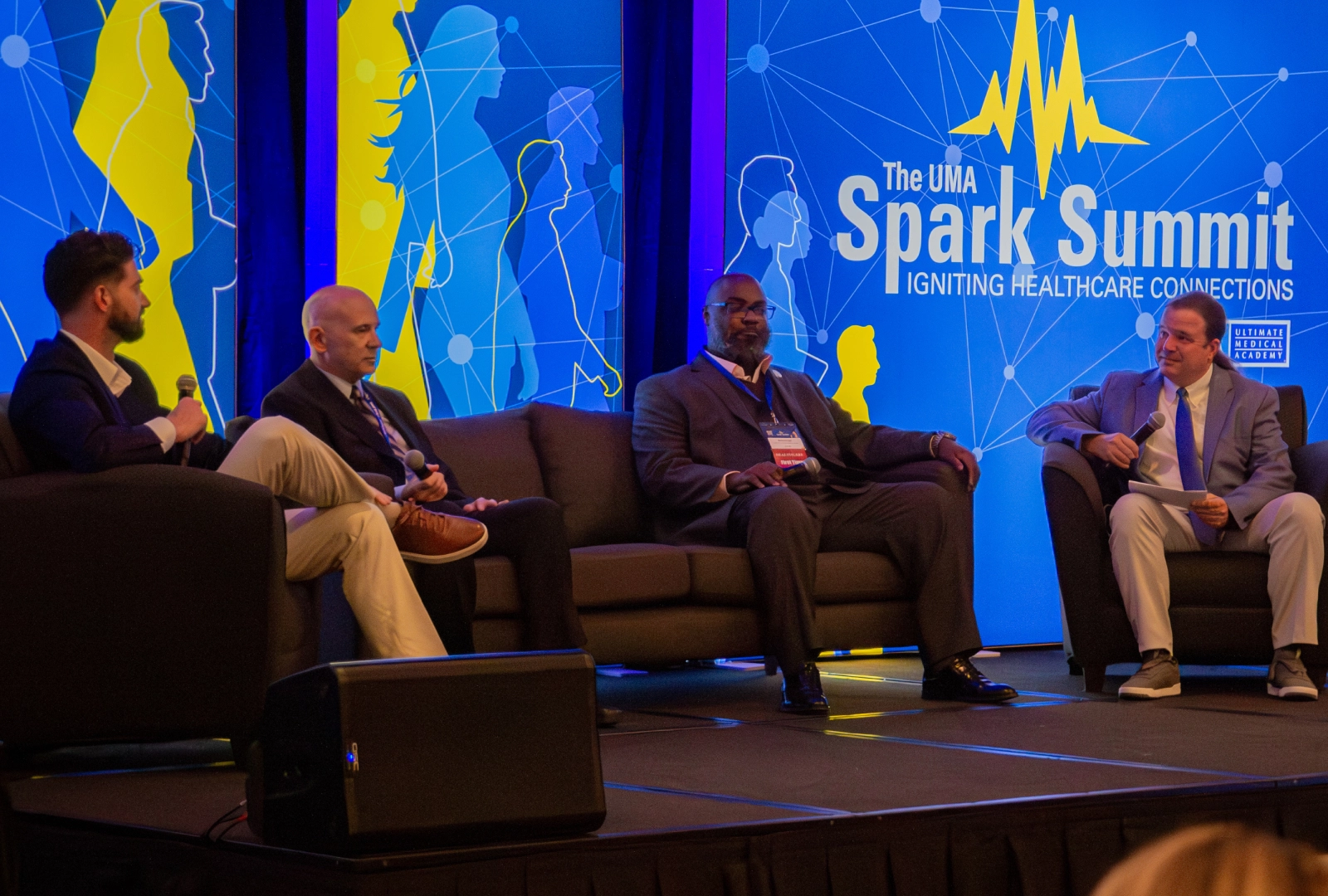
One of the highlights of Spark 2026 was a panel discussion with several Nasium Training partners. This discussion focused on "rethinking workforce development," with the leaders sharing their experiences and insights.
Nasium Training provides allied healthcare training solutions and certification prep courses to employers who are interested in creating a strong, skilled workforce.
The 11th Annual Spark Summit took place in Tampa, Florida, this spring. Over three days, the event fostered energy, optimism, and collaboration while reinforcing the shared commitment of Vocate Education Solutions — which includes Nasium Training, Ultimate Medical Academy, and American Institute — and attendees to transforming the healthcare workforce.
Spark Summit is an event where thought leaders come together to discuss recurring industry challenges including staffing shortages, high turnover rates, weak talent pipelines, and what training solutions are needed to drive positive outcomes. The conversations focus on identifying practical solutions for talent acquisition and retention, end-user experiences, and effective partnership-building strategies.
It was exciting to hear the Nasium Training panelists share their insights on the importance of investing in upskilling their teams. Alan Ayers, President of UrgentCare Consultants and a member of Experity's leadership team, moderated the discussion between Steve Marks, Market Director of Clinical Education & Professional Development at Northwest HealthCare; Wayne Wright, Vice President of Talent Management at SSM Health; and Kory Kostecka, Vice President of Operations and Sales at Paramount Staffing.
The central theme emerging from this discussion was the need to 'rethink workforce development.' Topics discussed included:
Eliminating barriers to growth. Wright discussed how his organization offered tuition reimbursement as an employee benefit; however, the process was complicated and didn’t provide clear career pathways for employees. He worked with his team of stakeholders to create a flexible program that allowed full-time employees to learn, get certifications, and grow within the organization.
Career pathing for retention. Marks shared that in a debrief of new nurses, his organization learned that roughly 60% were already planning to leave for their next position. To help combat this, his company prioritizes career pathing to help keep employees engaged. This involves leadership asking what role these individuals can move into next.
Developing talent pipelines. Kostecka indicated that clients of his staffing firm struggled to find licensed health agents. His organization's strategy was to work with an upskilling partner that could help them provide a steady stream of talent. Kostecka shared that forging a partnership with Nasium Training has enabled them to create a pipeline of health agents, while also taking on the duty of verifying candidates' credentials so their clients don't have to.
Focusing on outcomes that matter. Panel members said that the workforce development metrics that mattered most to their leadership included both organizational outcomes (time to fill open positions, retention and turnover rates, employee engagement levels, and the employee experience) and employee outcomes (training program completion and certification rates). They also discussed the value of employees receiving training with no out-of-pocket costs while being provided with the support needed to help promote learning success for adults working full-time, along with how much they appreciated the status updates that Nasium Training provides employers so they can track employees' progress.
Communicating training ROI to leadership. Training costs both time and money, so panel members expressed that there can be some resistance from leaders to implementing these types of programs. Marks indicated that effectively communicating the return on investment (ROI) to stakeholders, such as how training can support workforce stability, and setting leaders' expectations are important to getting their buy-in.
Choosing the right training partner. Wright stated that, when it comes to developing a workforce training strategy, "you can't do it alone." Kostecka agreed, reinforcing the value his organization has experienced in outsourcing training with a partner who shares a common mission. Marks agreed and added that because of Nasium Training they were able to quickly pivot and align with state requirements for the Limited Scope Radiography Training program.
We'll always face workforce challenges within the healthcare industry. But this Nasium Training panel discussion also reinforced that, through our collaborative power, we can work together to develop effective solutions.
Nasium Training Is Your Partner in Allied Healthcare Workforce Training
Nasium Training understands healthcare industry workforce challenges and can work with you to tailor a program focused on your specific needs and requirements. We offer allied healthcare workforce training solutions for both clinical and non-clinical roles, along with certification prep courses designed to prepare your team members for industry-recognized exams.
Contact us to learn more about our employee training programs or to discuss how we can help you strengthen your healthcare team.
Frequently Asked Questions about the Spark Summit
What is the Spark Summit?
The Spark Summit is an annual three-day event that enables healthcare leaders to come together and discuss their biggest challenges, sharing the solutions they've found to overcome them. It focuses on strategies to improve recruitment and retention while elevating the employee and customer or patient experience. Each year, it also delves into topics that are significant at the time, such as technology, AI, and risk management at the 2026 summit.
What is it like to attend the Spark Summit?
The Spark Summit can leave you energized to take action toward raising the bar in healthcare by creating a workplace that employees want to be a part of and that contributes to quality patient care. Through panel discussions, keynote speeches, and social activities, you can meet and network with other healthcare industry leaders who share your mission and goals.
What can I do if I want to attend a future Spark Summit?
If you'd like to attend a future Spark Summit, contact us to get on the notification list. We'd love to see you there and hear about your healthcare workforce challenges and solutions to better identify strategies that could help others facing similar difficulties.
Get solutions for your healthcare workforce challenges.
We understand the working learner. Talk to us and we can customize
our healthcare training components to deliver the trained workforce
you need.
About the Author
Christina DeBusk is a freelance writer who has been providing health and wellness content to healthcare organizations such as the American Chiropractic Association and International Sports Sciences Association (ISSA) since 2011. She obtained her Bachelor of Science in Sociology from Central Michigan University, minoring in psychology. She has also earned several ISSA certifications, including Certified Personal Trainer and Certified Nutrition Specialist, achieving the status of Elite Trainer.
Get solutions for your healthcare workforce challenges.
We understand the working learner. Talk to us and we can customize our
healthcare training components to deliver the trained workforce you need.