Healthcare organizations across the U.S. face sustained staffing gaps in medical imaging. They’re feeling the effects via lengthy test result wait times, rising radiologist burnout rates, and diagnostic care accessibility issues in rural and underserved communities.1 One practical strategy is to train non-radiology team members to perform basic X-rays under supervision. This type of limited scope radiography can help facilities navigate the imaging capacity gap.
What’s Driving Today’s Imaging Capacity Gap?
Radiology department challenges can be attributed, at least in part, to supply versus demand. Imaging needs are projected to increase due to population ageing, chronic disease management, and the use of these diagnostic tests for diseases such as cancer.2
At the same time, many radiology professionals are closing in on retirement, while others are reducing their hours or exiting the profession altogether due to burnout and unmanageable workloads.3

The amount of training required to enter this healthcare role can also create a delay in providing organizations relief — the longer training takes, the longer healthcare facilities must wait for these professionals to be prepared to fill open positions. Combine these factors, and the result is an imbalance between imaging demands and the staff available to provide these types of services. This ultimately can impact the overall patient experience.
Will this imbalance worsen?
It’s difficult to say, but a study conducted by the Harvey L. Neiman Health Policy Institute set out to answer this question. Their report showed that the number of radiologists is expected to increase 25.7% from 2023 to 2055, while imaging utilization could increase by 16.9% to 26.9% during the same time. Dr. Eric Christensen, PhD, Research Director at the Neiman Institute, explains that this suggests that “the shortage is not projected to get worse, nor will it likely improve in the next three decades without effective action.”5
At Nasium Training, we believe that effective action includes being innovative and looking beyond traditional radiologist pathways. One potential solution is to recruit and train non-radiology healthcare staff in limited scope radiography training.
Why Limited Scope Radiography Training Makes Sense
A limited scope of practice in radiography training course prepares non-radiology staff to perform defined radiographic procedures under the supervision of a radiologic technologist (RT) or physician. A medical assistant or other allied health professional could be trained to perform limited scope X-ray functions as part of a cross-functional or multi-skilled team. The emphasis of this type of training program is on targeted competencies rather than a full radiology specialization.
Nasium Training’s Limited Scope Radiography Training course provides learners with instruction in X-ray science, radiographic anatomy, and quality assurance. They also gain hands-on experience with equipment operation, positioning, and image production. The goal is to help learners deliver safe, consistent imaging for basic, routine exams, while directing complex cases to fully licensed radiology professionals.
Operational and Patient-Centered Benefits of Limited X-Ray Techs
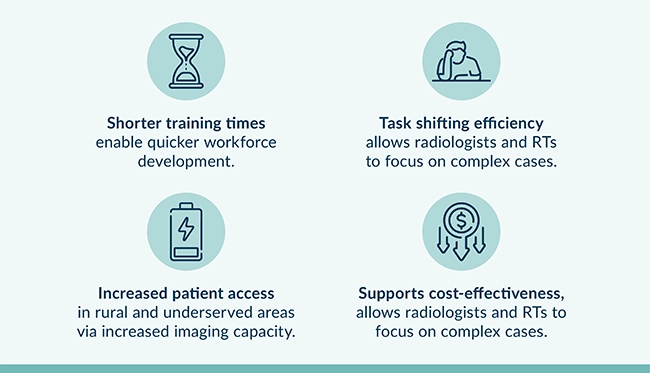
Introducing trained, limited scope X-ray techs can support imaging efficiency with lower-complexity exams. It would help redistribute workloads, so RTs and radiologists can focus on advanced imaging, interventional procedures, and patients with special considerations. In urgent care, primary care, and rural facilities, a limited scope X-ray tech could assist with daily operations by handling routine imaging on-site, helping reduce referrals and appointment delays.
When compared with comprehensive RT programs, limited scope pathways are shorter and more targeted. They emphasize core competencies such as radiation safety, positioning for authorized regions, anatomy and image evaluation, equipment operation, and quality assurance. While full-scope licensure remains essential for broad responsibilities and advanced modalities, limited scope education is a pragmatic strategy to grow capacity where it’s needed most — particularly amid a radiologist shortage7 and rising imaging demand.8
Limited Scope Radiography Licensing and Certification
State regulations govern limited scope imaging practice. Requirements can include completing an approved education program, meeting documented clinical competencies, and/or passing a state exam or recognized assessment aligned to a limited scope of radiography practice.
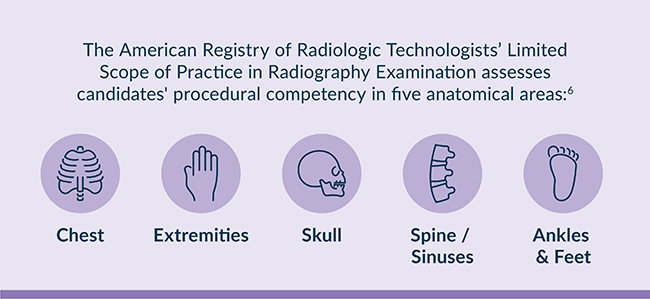
In Florida, for instance, limited technologists must apply for licensing and pass the American Registry of Radiologic Technologists’ Limited Scope of Practice in Radiography.9 This exam assesses applicants' knowledge in three core areas — patient care, safety, and image production — along with testing positioning and projections within five anatomic regions (chest, extremities, skull / sinuses, spine, and podiatric).10
Passing this exam helps validate the professional’s foundational knowledge and practical skills in radiation safety, anatomy, positioning, equipment operation, and image quality for permitted anatomic regions. It can also signal their readiness to perform defined exams under supervision and within the scope of practice.
Learn more: Limited Scope Radiography Training and Licensing
Implementing a Limited Scope Training Program
Limited scope X-ray technician programs like the one offered through Nasium Training blend didactic learning with hands-on skill development, aligning course content with state regulations. Providing a clear pathway supports learners in becoming competent, limited scope practitioners who can effectively integrate their skills into clinical practice.
Considerations when implementing a training program include:
- Standards-aligned curriculum: Objectives should be mapped to state-approved guidelines and exam blueprints, focusing on radiation protection, anatomy, positioning, image quality, and quality assurance.
- Hybrid learning: Courses that combine online coursework with in-person labs provide working learners with both flexible study and hands-on practice.
- Simulation and skills labs: This affords learners the ability to practice positioning, exposure selection, and image critique in a controlled environment before entering the workplace.
- Certification prep: Programs that include ARRT exam prep not only assist learners with the preparation of this test, but also enable them to assess their exam readiness.
- Employer feedback: Nasium Training provides employers with regular updates on their learners’ progress in the Limited Scope of Radiography training course.
Addressing Limited Radiography Risks and Maintaining Standards
Concerns about limited radiography practitioners include insufficient training, increased imaging error risk, and compromised patient safety.11 These can be addressed with clinical governance.
Strategies to mitigate risks and maintain X-ray quality standards may include:
- Implementing clear positioning guides, exposure parameters, and dose optimization tools to reduce variability and repeats
- Establishing explicit lines of supervision and escalation so complex cases are managed by RTs or radiologists
- Documenting limited scope boundaries and competency benchmarks to distinguish responsibilities and maintain quality
- Using ongoing competency checks, image critiques, and continuing education to sustain performance over time
- Following state scope and supervision rules, ensure proper documentation, and communicate the basic X-ray operator’s role transparently to patients
Effective radiology workforce solutions can help preserve patient safety and diagnostic quality.
Future Outlook: Sustaining Imaging Capacity
How do you meet patients’ imaging needs in the face of radiology workforce challenges? The answer may lie in a coordinated approach that blends training innovation, workforce sustainability strategies, and technology-enabled support.
Training innovations
One strategy is to focus on competency-based progression. Advance learners based on performance, accelerating their readiness for training and limited scope competency exams. Also, consider flexible delivery. Hybrid programs can broaden reach to rural sites and accommodate working professionals.
Workforce sustainability strategies
Create a program that involves mentorship and supervision. Provide shared responsibility for limited X-ray techs to increase training capacity and reduce bottlenecks. Providing clear pathways to limited scope credentials also supports employees’ professional growth and skills development, which can aid in career progression.
Technology-enabled support
Integrate protocol prompts, positioning aids, and exposure guidance into equipment and software used by limited X-ray techs. Consider the use of automated repeat analysis and dose tracking to monitor performance, inform coaching, and update protocols.
Call to Action
Policymakers, educators, and healthcare leaders play a pivotal role in the development and implementation of effective radiology shortage solutions. Taking an active role in the process can contribute to a future in which there are more than enough radiology professionals — whether full scope or limited — to handle the growing imaging demand.12
Support Radiology Efficiency With Nasium Training’s Limited Scope X-Ray Training
Limited scope radiography training can be a pragmatic response to workforce challenges, supporting radiology collaboration, safety, and innovation. Nasium Training’s hybrid Limited Scope Radiography Training course can prepare your medical assistants and other healthcare professionals with the skills to perform basic X-ray functions.
This training includes preparation to sit for the AART Limited Scope of Practice in Radiography exam and offers learners support via a variety of channels (chat, email, instructor hours, and online support).
If you’re interested in upskilling and reskilling your workforce to support imaging demands, contact us to discuss how this training can be tailored to your organization’s needs.
Duration and series hours are based on state requirements and other factors. Training availability varies by state.
FAQs
- What are the most common radiology workforce pressures today? Facilities today can face a variety of pressures, ranging from radiologic technologist vacancies to longer wait times for routine X-rays to challenges in recruiting and retention. The demand for radiologists is outpacing supply, contributing to a broader radiologist shortage that strains services and increases reliance on overtime.13
- How can limited scope training help alleviate these issues? Preparing non-radiology staff for a limited scope of practice in radiography enables them to perform routine exams under supervision. This can help shift basic X-ray functions away from RTs, potentially easing scheduling constraints and expanding imaging capabilities.
- How could this impact patient care? On-site imaging could help support faster clinical decision-making, reduce the need for external referrals, and provide patients with greater convenience. With training and oversight, a limited scope X-ray tech can contribute to an efficient patient experience.
- How is limited scope training different from traditional RT education? Limited scope training is shorter in duration and targeted to specific anatomic regions. Traditional RT education is more comprehensive, preparing professionals for wider responsibilities, autonomy, and advanced modalities.
- How long is a limited scope radiography training program? The length of Nasium Training’s Limited Scope Radiography Training course varies depending on your state’s requirements and other factors.
- Can Nasium Training provide limited scope radiography training to teams of employees? Yes. Our healthcare training programs can be tailored to accommodate teams of varying sizes. Tell us how many employees you want to upskill and reskill, and we’ll work together to find a solution.
1 Vesta Teleradiology. Radiology Workforce Shortage Deepens in 2025: How Teleradiology Can Help, paras. 1 & 2. https://vestarad.com/radiology-workforce-shortage-deepens-in-2025-how-teleradiology-can-help/
2 Bureau of Labor Statistics. Occupational Outlook Handbook. Radiologic and MRI Technologists. Job Outlook. https://www.bls.gov/ooh/healthcare/radiologic-technologists.htm#tab-6
3 Advanced Health Education Center. Navigating Radiology Staffing Shortages: Strategies for Healthcare Facilities, Understanding the Causes of Radiology Staffing Shortages. https://aheconline.blog/2025/02/19/navigating-radiology-staffing-shortages-strategies-for-healthcare-facilities/
4 Utano, A. The Domino Effect: Improving PFML in Radiology. American College of Radiology, The Bigger Picture. https://www.acr.org/Clinical-Resources/Publications-and-Research/ACR-Bulletin/the-domino-effect-improving-pfml-in-radiology
5 Harvey L. Neiman Health Policy Institute. New Studies Shed Light on the Future Radiologist Workforce Shortage by Projecting Future Radiologist Supply and Demand for Imaging, para. 2. https://www.neimanhpi.org/press-releases/new-studies-shed-light-on-the-future-radiologist-workforce-shortage-by-projecting-future-radiologist-supply-and-demand-for-imaging/
6 ARRT. Limited Scope of Practice in Radiography, Procedure Modules. https://assets-us-01.kc-usercontent.com/406ac8c6-58e8-00b3-e3c1-0c312965deb2/7deaf7d9-9770-427b-b9c6-3e6a555020cc/LIM_CSTI_2023.pdf
7 Vesta Teleradiology, para. 1.
8 Bureau of Labor Statistics.
9 Florida Health. Licensing, Licensure By Exam, Examination Name & Other Information. https://www.floridahealth.gov/licensing-and-regulation/radiologic-technology/licensing/index.html
10 ARRT, Core Module (p. 1) & Procedures (p. 8).
11 New York State Radiological Society. NY Legislation: Oppose Limited Scope Radiographer in Urgent Care Settings, Memorandum in Opposition, para. 4. https://nysrs.org/ny-legislation-oppose-limited-scope-radiographer-in-urgent-care-settings
12 Bureau of Labor Statistics.
13 Vesta Teleradiology, para. 1 & What’s Driving the Shortage?