Cardiovascular disease remains the leading cause of death in the United States.1 With an aging population, demand for skilled cardiovascular care continues to rise. Yet many hospitals face a shortage of cardiovascular technologists (CVTs), the professionals who assist cardiologists in diagnostic and interventional procedures in the cath lab.
In fact, hospitals nationwide continue to face significant workforce challenges in cardiovascular care. A 2025 feature from the American College of Cardiology reports that physicians and the cardiovascular care team—including technologists who support diagnostic and interventional procedures—is under unprecedented strain, creating a workforce crisis that threatens access to timely, high‑quality care across the country.2
To help meet this growing need, Nasium Training, has launched a new CVT program to train and prepare future technologists.
Inside the CVT Program
This program was launched in Florida and prepares participants for the Registered Cardiovascular Invasive Specialist (RCIS) exam through a mix of:
- 6 weeks of prerequisite coursework (optional for learners with prior clinical experience)
- 24 weeks of online didactic and laboratory instruction
- 28 weeks of supervised clinical training
Learners gain hands-on experience with hospital equipment and simulation labs while receiving mentoring and academic support from Nasium Training faculty.3
“Our goal is to prepare graduates to walk into the cath lab on day one with the skills and confidence to make a difference,” said Cristal Rayos, Nasium Training program director, who has served as a CVT professional and instructor.
We Kicked off the Program with Partner Hospitals
At the end of Summer 2025, Nasium Training launched its inaugural cohort in partnership with two large, Florida-based healthcare systems. Each hospital hand-selected employees — including nurses, paramedics, pharmacy technicians, and medical assistants — to create a diverse learning cohort eager to advance their careers.
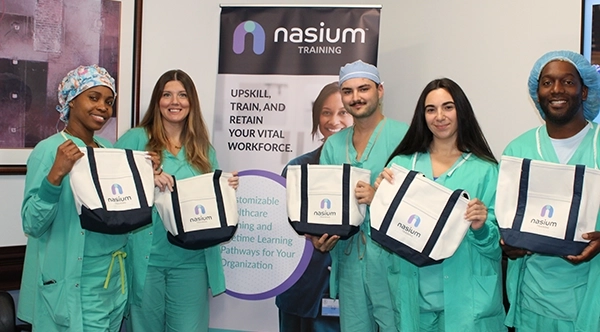
We kicked off orientation with a group of approximately 20 participants including hospital leaders, the Training team, and learners who gathered for celebration and preparation. Learners met their instructors, explored the learning management system, and received program materials.
Early Energy and Momentum
Nasium Training leaders noted how eager learners were to dive into their studies. “What stood out to me was their curiosity — they wanted to go deeper right away,” said Rayos. “They’re inquisitive, motivated, and ready to take on this challenge.”
Many students bring years of prior healthcare or technical experience, while others are entering a clinical role for the first time. “We believe this is proof of the program’s ability to upskill diverse talent identified by partner hospitals as having strong potential,” said Lisa McClure, Vocate Education Solution’s Vice President, Academic Programs and Policy.
Hands-On Labs
The cohort is now progressing through coursework and preparing for their first hands-on labs, which will focus on 12-lead EKG practices before moving into invasive cardiovascular procedures.
Looking Ahead
Nasium Training will continue to work closely with our healthcare partners to ensure learners have the support they need to succeed and organizations see measurable workforce impact and improved patient care. Given the national shortage of CVTs, program expansion is already under discussion with additional health systems.
“Hospitals are struggling to fill these roles, and relying on traveling technologists is costly and unsustainable. Through this program, we’re helping partners grow their own talent. And that benefits the hospital, the employee, and the patients they serve,” said McClure.
Building a Healthier Future
For Nasium Training, the CVT program represents more than a reskilling initiative, it’s a commitment to advancing cardiovascular care nationwide. With more hospitals seeking solutions to their technologist shortages, this first cohort marks the beginning of a new era in cardiac workforce development.
Partner with Nasium Training to reskill and upskill your team.
Get in touch today to learn how Nasium Training can help you develop qualified cardiovascular technologists ready to step into high-demand roles.